11 Aug 2026, 07:15 UTC≈1,930 views16 reactionsread 9 November 2026 Photo
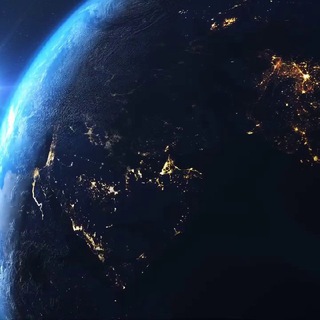
😮On August 12, a rare astronomical show awaits us — three bright celestial events will coincide on the same day: a solar eclipse, a planetary parade, and the peak of the Perseid meteor shower.
Astronomers call this coincidence extremely rare:
• Before dawn, you can observe a parade of six planets: Jupiter, Mars, Mercury, Saturn, Uranus, and Neptune.
• In the evening, there will be a solar eclipse: in some regions, i…
🔥10❤6
9 Aug 2026, 07:40 UTC≈1,740 views11 reactionsread 9 November 2026 Video
Scientists from the United States obtained the most detailed images of the Sun’s surface — and for the first time, they spotted moving feather‑like patterns in them. Initially, the images were taken to adjust the Inouye telescope at the observatory in Hawaii. However, after studying the images, astronomers realized that they had managed to capture the Sun with record‑level detail. The researchers stated that these st…
🔥6❤5
8 Aug 2026, 07:36 UTC≈1,520 views16 reactionsread 9 November 2026 Photo
☁️ The cloudy sky of Mars, captured by the Curiosity rover.
❤7🤩6👍1🔥1🥰1
7 Aug 2026, 07:17 UTC≈1,610 views27 reactionsread 9 November 2026 Photo
The aurora borealis over Iceland in the shape of a phoenix.
❤🔥17🤩3🥴3🆒3❤1
6 Aug 2026, 07:23 UTC≈1,270 views12 reactionsread 9 November 2026 Photo
A collage of the space objects of our system
👍8🥰3❤1
5 Aug 2026, 07:31 UTC≈1,370 views9 reactionsread 9 November 2026 Video
We’re not so round after all: please welcome the Earth’s geoid — a theoretical surface.
It shows the level of the world’s oceans beneath the continents, which is affected only by the force of gravity — without taking into account tides, currents, and atmospheric pressure.
The model was created by NASA based on 15 years of observations from 19 satellites.
👍6🆒2❤1
4 Aug 2026, 07:23 UTC≈1,130 views14 reactionsread 9 November 2026 Video
The largest planet in the Universe
HD 100546 b, the largest known exoplanet, was discovered using the Very Large Telescope in Chile. It is located 337 light‑years away from the Solar System.
👍9🆒4😍1
3 Aug 2026, 07:05 UTC≈1,090 views7 reactionsread 9 November 2026 Video
The analemma is the annual apparent motion of the Sun across the celestial sphere. Its shape and tilt are determined by the tilt of the Earth's axis, its orientation, and the ellipticity of the Earth's orbit. The highest and lowest points correspond to the summer and winter solstices.
❤4👍2🔥1
2 Aug 2026, 07:02 UTC≈1,120 views11 reactionsread 9 November 2026 Video
A simple model of the solar system. Here, 1 year is compressed into 2 seconds (a total of about 30 years).
❤6👍4🆒1
1 Aug 2026, 07:58 UTC≈1,170 views11 reactionsread 9 November 2026 Video
What's it like to dive into Earth's atmosphere?
Experience it with the Orion spacecraft, which returned from its lunar flyby on December 11, 2022 🔥
🔥7❤2🤔2
31 Jul 2026, 07:56 UTC≈1,430 views40 reactionsread 9 November 2026 Photo
This is what flat-Earthers see on a clear day.
🤣30😁5❤2🍌2🥰1
30 Jul 2026, 07:52 UTC≈1,160 views17 reactionsread 9 November 2026 Photo
The galaxy IC 1101 is 60 times larger than the Milky Way and 2,000 times more massive.
If it were located where our galaxy is, it would have swallowed the Large and Small Magellanic Clouds, the Andromeda Nebula, and the Triangulum Galaxy.
🔥11🤯3❤2🍌1
Showing the 12 most recent of 22 posts we hold for @space_en. View and reaction counts are the latest single reading for each post, not a live figure, and a recent post is still accumulating both. A view count marked ≈ was rounded by Telegram before we ever saw it — t.me prints views in full below 1,000 and to three significant figures above, so ≈1,200,000 means somewhere between 1,150,000 and 1,249,999. Unmarked counts are exact. Text is reproduced from the public post preview and truncated for length.