26 Jun 2021, 02:20 UTC≈4,100 viewsread 11 September 2026
Photo
@universal_astronomy
Signed ×͜× WIMATH LONIJA ×͜×
Channel
@universal_astronomy
On this record: Topic · Growth · Engagement · Posts · Handles named that no longer answer · Cite this entry
171subscribers
-6 since we began measuring on 11 September 2026
Risers and fallers across the register · movement among entries of Under 1,000.
| Telegram ID | -1001165517653 |
|---|---|
| Type | Channel |
| Username | @universal_astronomy |
| Created | Between 1 March 2018 and 8 April 2021 — estimated from Telegram’s id allocation, not measured. How this range is calculated. |
| First recorded | 11 September 2026 |
| Last confirmed live | 31 October 2026 |
| Measurements held | 5 |
| Confirmed unchanged | 1 time, most recently 31 October 2026 |
| On Telegram | t.me/universal_astronomy |
Science — a classification, not a measurement. An on-box language model (Qwen3.6-35B-A3B-FP8, prompt version 1) read this channel’s own recent posts on 30 September 2026 and assigned it the closest of 31 fixed categories, at 88% confidence. This is a model’s judgement about what the channel is likely to be about, not a fact this register measured the way a subscriber count or a view count is measured — it can be revised on a later pass, and it carries no weight anywhere else on this page. How this classification works, and the other topics.
| Measured (UTC) | Subscribers | Change |
|---|---|---|
| 31 Oct 2026, 02:20 | 171 | -1 |
| 24 Oct 2026, 00:39 | 172 | -1 |
| 30 Sept 2026, 09:19 | 173 | -2 |
| 12 Sept 2026, 23:18 | 175 | -2 |
| 11 Sept 2026, 23:22 | 177 | first reading |
20 posts held, back to 8 April 2021 — the reader has not yet reached the start of this channel’s public history, so older posts may sit further back, unread. Read across 1 page of Telegram’s post history, 20 posts per page.
Nothing published in the last 30 days. ERR and ER are rolling 30-day measures, so there is nothing to compute — we hold 20 posts for this entry, the most recent from 26 June 2021. An engagement rate over an empty window would be a number about nothing.
@universal_astronomy
Signed ×͜× WIMATH LONIJA ×͜×
@universal_astronomy
Signed ×͜× WIMATH LONIJA ×͜×
@universal_astronomy
Signed Vidusha Nawalage
Mars has two satellites known as Phobos and Deimos. Deimos is the smaller and outermost of the two natural satellites of mars. Phobos is the innermost and large of the two natural satellites of mars. @universal_astronomy
Signed ×͜× WIMATH LONIJA ×͜×
Neptune - Most Distant Planet . Smallest of the Gas Giants . Surface Gravity is Almost Earth-like: @universal_Astronomy
Signed ×͜× WIMATH LONIJA ×͜×
Uranus is the planet in the solar system that is 7th in order of distance from the sun. @universal_astronomy
Signed ×͜× WIMATH LONIJA ×͜×
Saturn is the sixth planet from the sun and that has rings around it. @universal_astronmy
Signed ×͜× WIMATH LONIJA ×͜×
Jupiter is the largest planet of the solar system, fifth in order of distance from the sun. @universal_astronomy
Signed ×͜× WIMATH LONIJA ×͜×
Mars is the planet in the solar system that is fourth in order of distance from the sun, between the Earth and Jupiter. @universal_astronomy
Signed ×͜× WIMATH LONIJA ×͜×
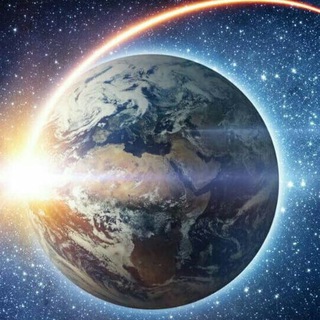
Earth is the planet on which we live; the world And the third planet from the sun. @universal_astronomy
Signed ×͜× WIMATH LONIJA ×͜×
Venus: The planet in the solar system that is second in order of distance from the sun, between Mercury and the earth. @universal_Astronomy
Signed ×͜× WIMATH LONIJA ×͜×
Mercury is the smallest planet in the solar system, nearest to the sun. 😡😡⚠️
Signed ×͜× WIMATH LONIJA ×͜×
Showing the 12 most recent of 20 posts we hold for @universal_astronomy. View and reaction counts are the latest single reading for each post, not a live figure, and a recent post is still accumulating both. A view count marked ≈ was rounded by Telegram before we ever saw it — t.me prints views in full below 1,000 and to three significant figures above, so ≈1,200,000 means somewhere between 1,150,000 and 1,249,999. Unmarked counts are exact. Text is reproduced from the public post preview and truncated for length.
@universal_astronomy named 1 handle that resolve to nothing today. That is a fact about the reference, not necessarily a fact about the handle’s history — see the two groups below.
Most of these may never have existed as a live channel at all. A handle a channel names can be a typo, an aspirational name nobody registered, or a channel that was already gone before this one ever mentioned it. Unless a row below is marked evidenced, all we know is that it references a handle that is not a live channel today — not that anything “died”. How this is measured.
References a handle that is not a live channel — we have no record it ever was one.
A live page changes as we take new readings, so a citation should name the measurement it is based on, not just the URL. The line below cites the subscriber count as measured 31 October 2026 — this entry's latest reading, not the date you are reading this.
“ASTRONOMY 🚀🌍🌏🪐☄️” (@universal_astronomy), 171 subscribers as measured 31 October 2026. Telegram Register, tgregister.com/channel/universal_astronomy.
Full measurement history, CC BY 4.0. Every reading this register holds for this entry, not just the latest one, as a dated, downloadable record: CSV · JSON. Free to use with attribution to tgregister.com. Each file carries its own generation timestamp, which is the figure to cite for exactly when the data was retrieved.