1 Oct 2022, 18:40 UTC≈1,800 views6 reactionsread 6 August 2026
File
@psycholinguistics
❤5👍1
Signed A Sdoost
Channel
@psycholinguistics
On this record: Growth · Engagement · Reactions · Posts · Cite this entry
548subscribers
-7 since we began measuring on 5 August 2026
Risers and fallers across the register · movement among entries of Under 1,000.
| Telegram ID | -1001059528984 |
|---|---|
| Type | Channel |
| Username | @psycholinguistics |
| Created | Between 1 May 2016 and 28 February 2017— estimated from Telegram’s id allocation, not measured. How this range is calculated. |
| First recorded | 6 August 2026 |
| Last confirmed live | 28 August 2026 |
| Measurements held | 5 |
| Confirmed unchanged | 1 time, most recently 28 August 2026 |
| On Telegram | t.me/psycholinguistics |
| Measured (UTC) | Subscribers | Change |
|---|---|---|
| 28 Aug 2026, 05:42 | 548 | -4 |
| 20 Aug 2026, 21:47 | 552 | -1 |
| 14 Aug 2026, 20:24 | 553 | -2 |
| 6 Aug 2026, 18:17 | 555 | no change |
| 5 Aug 2026, 23:53 | 555 | first reading |
20 posts held, back to 27 July 2022 — the reader has not yet reached the start of this channel’s public history, so older posts may sit further back, unread. Read across 1 pageof Telegram’s post history, 20 posts per page.
Nothing published in the last 30 days. ERR and ER are rolling 30-day measures, so there is nothing to compute — we hold 20 posts for this entry, the most recent from 1 October 2022. An engagement rate over an empty window would be a number about nothing.
10 reactions across 4 posts, in 3 distinct kinds. The most used accounts for 70.0% of them.
| Reaction | Count | Share | Share, drawn |
|---|---|---|---|
| ❤ | 7 | 70.0% | |
| 👍 | 2 | 20.0% | |
| 👏 | 1 | 10.0% |
No sentiment is inferred, and none should be read in. This table is ordered by count and by nothing else. Emoji do not carry stable meaning across languages or communities — 🙏 is thanks in one channel and mourning in another — so we publish which ones were pressed and how often, and pass no judgement on what an audience meant by them.
Precision. Telegram publishes reaction counts per emoji and short-forms each one — 4.34K, 1.2M — so any single kind at or above 1,000 reaches us at three significant figures, and only counts below 1,000 are exact. The shares above are ratios of those figures and carry the same error. This is also why the total here can differ slightly from a reaction total printed elsewhere on the page: both are sums of the same rounded parts, taken over samples with different edges.
Coverage. Reactions were read on 4 of the 20 sampled posts in this sample. Summed by Telegram’s own count on each post — not by adding up the per-emoji breakdown above — those same posts carry 10reactions in total: the kind of figure the paragraph above means by “a reaction total printed elsewhere on the page”.
Measured over the 20 most recent posts we hold, published 27 July 2022 to 1 October 2022, using the newest reading held for each. Telegram Stars are excluded: they are a payment, not a reaction, and they have their own section.
@psycholinguistics
❤5👍1
Signed A Sdoost
📚 Sae Onishi, Kunihito Tobita, Shogo Makioka. Hand constraint reduces brain activity and affects the speed of verbal responses on semantic tasks. Scientific Reports, 2022; 12 (1) DOI: 10.1038/s41598-022-17702-1 @psycholinguistics 👇🏽👇🏽👇🏽👇🏽👇🏽👇🏽👇🏽👇🏽👇🏽👇🏽
❤1
Signed A Sdoost
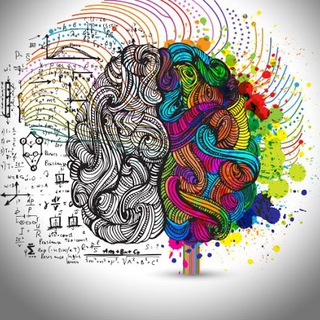
#brain #hand #participants_brains #participant #object #cognitive #cognition #word #result #symbol #symbol_grounding #measuring #measure #measured #measurement #acrylic #broom #size #processed #process #processing #real #verbally #verbal #meaning #onishi_worked @psycholinguistics 👇🏽👇🏽👇🏽👇🏽👇🏽👇🏽👇🏽👇🏽👇🏽👇🏽 https://www.sciencedaily.com/releases/2022/09/220915104800.htm
Signed A Sdoost
👉🏽 Talk with your hands? You might think with them too! Scientists observed how the brain responds to words representing hand-manipulable objects, when a participant's hands were either free to move or restrained. They showed that brain activity in response to hand-manipulable words was significantly reduced by hand restraints. Verbal responses were also affected by hand constraints. Their results support the idea o…
❤1👏1
Signed A Sdoost
@psycholinguistics
Signed A Sdoost
📚 Helena Levy, Adriana Hanulíková. Spot It and Learn It! Word Learning in Virtual Peer‐Group Interactions Using a Novel Paradigm for School‐Aged Children. Language Learning, 2022; DOI: 10.1111/lang.12520 @psycholinguistics 👇🏽👇🏽👇🏽👇🏽👇🏽👇🏽👇🏽👇🏽👇🏽👇🏽
Signed A Sdoost
👉🏽 Exposure to accents helps children learn words • University of Freiburg study on vocabulary acquisition uses novel game-based design • Study results: Children of primary school age can benefit from long-term experience with multiple accents when learning words in unfamiliar accents from other children • Bilingualism, on the other hand, did not lead to corresponding effects in vocabulary learning @psycholinguistic…
Signed A Sdoost
@psycholinguistics
Signed A Sdoost
📚 Karin van Nispen, Kazuki Sekine, Ineke van der Meulen, Basil C. Preisig. Gesture in the eye of the beholder: An eye-tracking study on factors determining the attention for gestures produced by people with aphasia. Neuropsychologia, 2022; 108315 DOI: 10.1016/j.neuropsychologia.2022.108315 @psycholinguistics 👇🏽👇🏽👇🏽👇🏽👇🏽👇🏽👇🏽👇🏽👇🏽👇🏽
Signed A Sdoost
👉🏽 Gestures can improve understanding in language disorders When words fail, gestures can help to get the message across -- especially for people who have a language disorder. An international research team has now shown that listeners attend the gestures of people with aphasia more often and for much longer than previously thought. This has implications for the use of gestures in speech therapy. @psycholinguistics …
Signed A Sdoost
@psycholinguistics
Signed A Sdoost
📚 Joanna Sierpowska, Katherine L. Bryant, Nikki Janssen, Guilherme Blazquez Freches, Manon Römkens, Margot Mangnus, Rogier B. Mars, Vitoria Piai. Comparing human and chimpanzee temporal lobe neuroanatomy reveals modifications to human language hubs beyond the frontotemporal arcuate fasciculus. Proceedings of the National Academy of Sciences, 2022; 119 (28) DOI: 10.1073/pnas.2118295119 @psycholinguistics 👇🏽👇🏽👇🏽👇🏽👇🏽👇🏽👇
Signed A Sdoost
Showing the 12 most recent of 20 posts we hold for @psycholinguistics. View and reaction counts are the latest single reading for each post, not a live figure, and a recent post is still accumulating both. A view count marked ≈ was rounded by Telegram before we ever saw it — t.me prints views in full below 1,000 and to three significant figures above, so ≈1,200,000 means somewhere between 1,150,000 and 1,249,999. Unmarked counts are exact. Text is reproduced from the public post preview and truncated for length.
A live page changes as we take new readings, so a citation should name the measurement it is based on, not just the URL. The line below cites the subscriber count as measured 28 August 2026 — this entry's latest reading, not the date you are reading this.
“Psycholinguistics” (@psycholinguistics), 548 subscribers as measured 28 August 2026. Telegram Register, tgregister.com/channel/psycholinguistics.
Full measurement history, CC BY 4.0. Every reading this register holds for this entry, not just the latest one, as a dated, downloadable record: CSV · JSON. Free to use with attribution to tgregister.com. Each file carries its own generation timestamp, which is the figure to cite for exactly when the data was retrieved.